
You’re Allowed to Be Human: A Gentle Practice of Self-Compassion
There’s a voice many of us know well.
It’s the one that says:
“You should be doing better.”
“Why are you like this?”
“Other people can handle this—why can’t you?”
And if you’re honest, that voice probably shows up most when you’re already struggling.
Self-compassion is not about ignoring growth or pretending things don’t matter. It’s about learning to meet yourself with kindness instead of criticism—especially on the hard days.
Because growth happens more sustainably in safety than in shame.
What Is Self-Compassion, Really?
At its heart, self-compassion is the practice of responding to yourself the way you would respond to someone you deeply care about.
It includes three gentle shifts:
Kindness
Choosing warmth over harshness in your inner dialogue.
Common humanity
Remembering you are not alone in your struggle. Being human includes making mistakes, feeling overwhelmed, and not having it all figured out.
Mindful awareness
Noticing what you feel without minimizing it or becoming consumed by it.
It can sound like:
“Of course this feels hard.”
“I’m doing the best I can with what I have today.”
“I don’t need to earn rest.”
“I can be imperfect and still worthy.”
If that feels uncomfortable to read, you’re not alone. For many people, self-compassion feels unfamiliar—or even unsafe—at first. That doesn’t mean you’re doing it wrong. It just means this might be new.
Small Ways to Practice in Daily Life
Self-compassion doesn’t have to be dramatic. In fact, the smallest moments often matter most.
You might try:
Taking one slow breath when you notice overwhelm.
Placing a hand on your chest or stomach as a grounding gesture.
Letting yourself pause instead of pushing through.
Replacing “What’s wrong with me?” with “What do I need right now?”
These moments may seem small. They’re not. They are micro-acts of nervous system care.
A 60-Second Self-Compassion Pause
When something feels heavy, try this:
Notice: What am I feeling right now?
Name: This is stress / sadness / frustration.
Normalize: I’m not alone—this is part of being human.
Nurture: What would feel kind or supportive in this moment?
That’s it. No fixing required.
A Creative Practice: Making a Self-Compassion Symbol or Collage
Sometimes words aren’t enough. That’s where art can help.
You don’t need to be “good at art.” This isn’t about aesthetics. It’s about creating something that holds care.
Option 1: Create a Self-Compassion Symbol
A symbol can hold meaning without needing explanation.
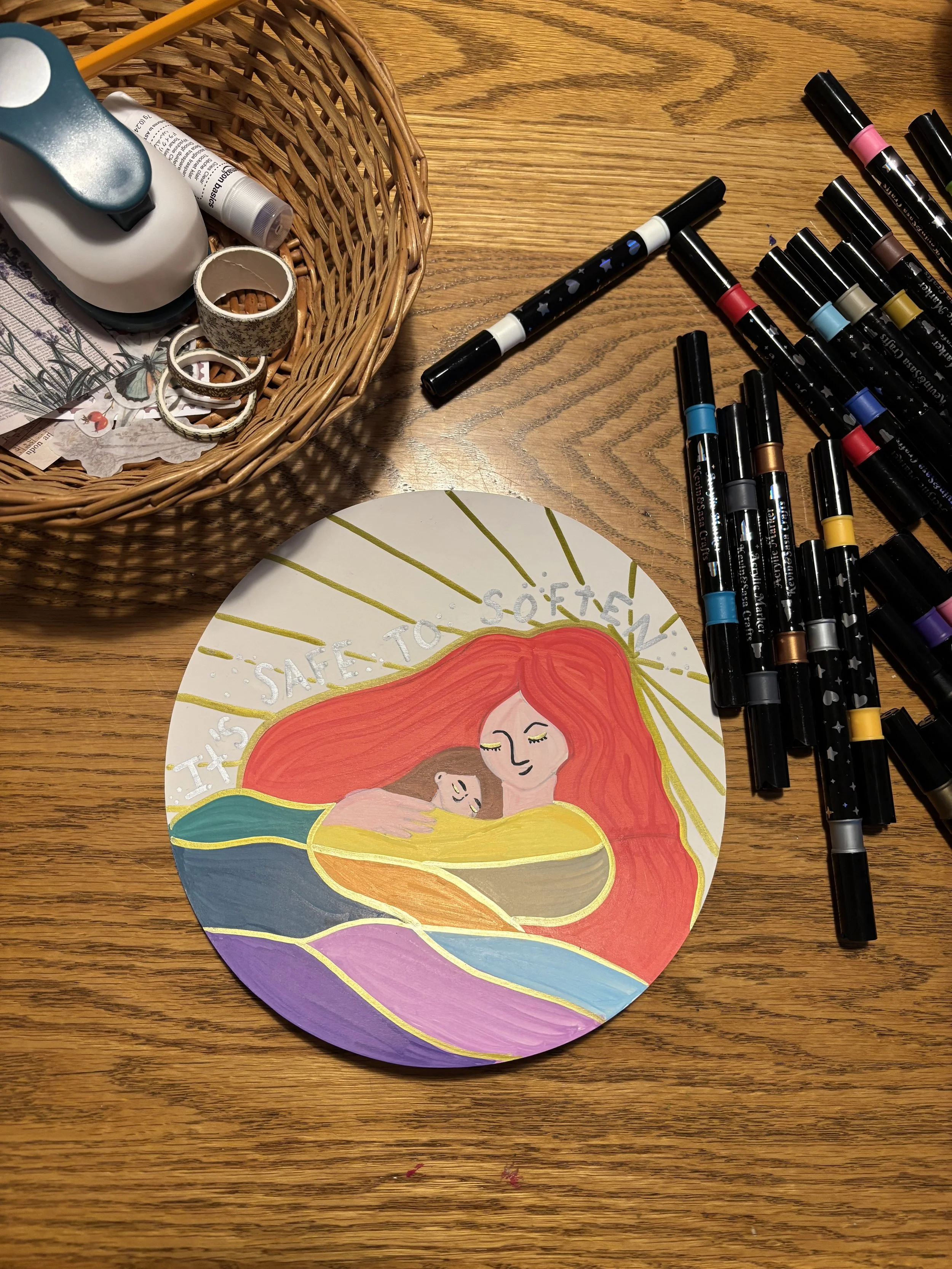
Take a few breaths and notice how you’re feeling.
Ask yourself: What does compassion toward myself look or feel like?
Let a shape, color, or image emerge.
Create without overthinking.
Pause and notice what it feels like to look at what you made.
This symbol can become something you return to on hard days—a visual reminder to soften.
Option 2: Create a Self-Compassion Collage
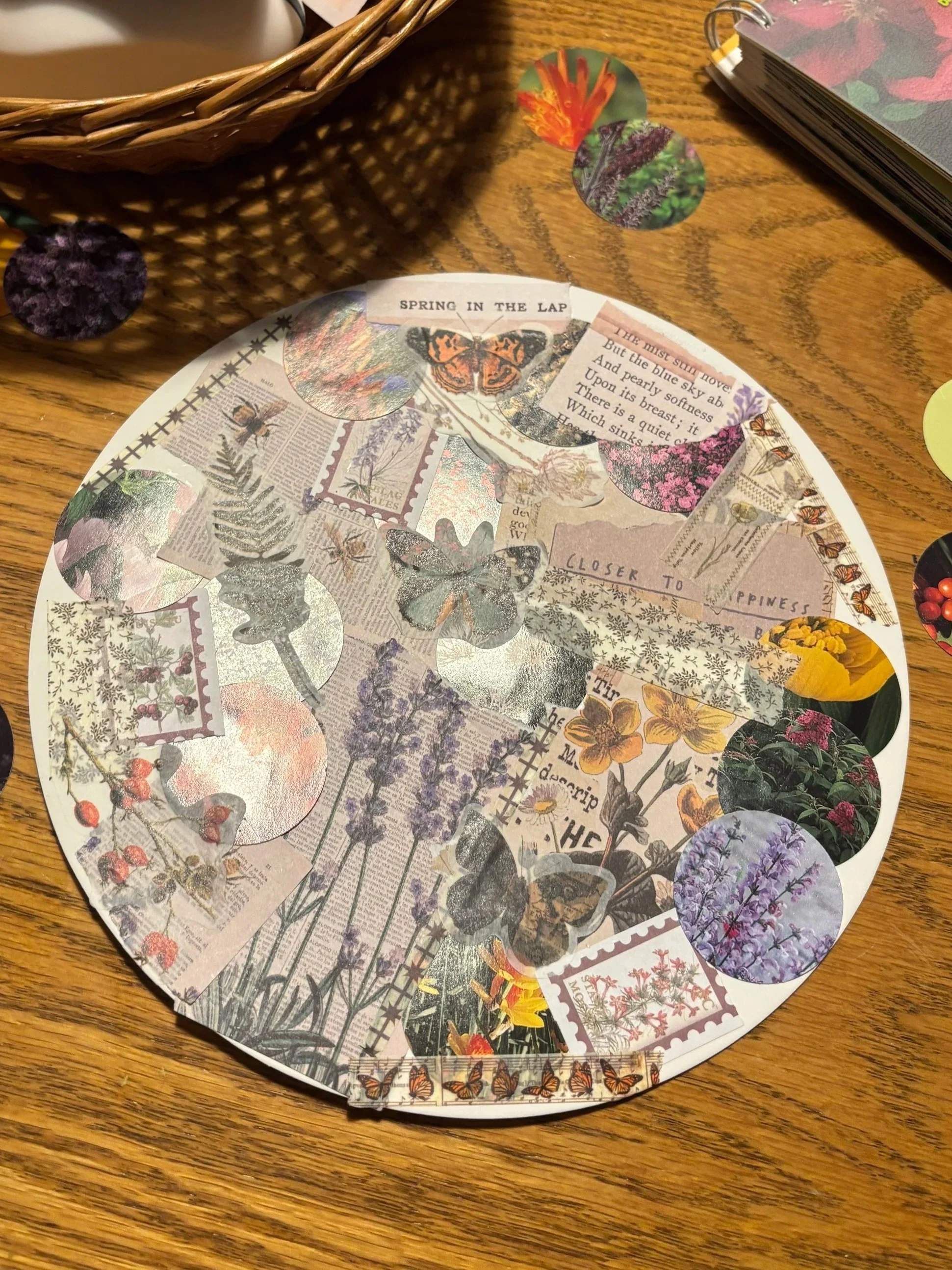
Gather images, words, textures, or colors that feel comforting or validating.
Ask yourself: What do I need more of right now?
Choose intuitively—if you’re drawn to it, include it.
Arrange and glue without worrying about how it looks.
Spend a moment witnessing what you created.
Let it exist without judging it.
A Gentle Reminder
Self-compassion is a practice. Not a personality trait. Not a destination.
If being kind to yourself feels awkward, that doesn’t mean you’re incapable of it. It might just mean you’ve had a lot of practice being hard on yourself.
You are allowed to be human here.
And you are allowed to learn a softer way.