
From Overthinking to Grounding: 10-Minute Mandala Art Practice
If you’ve ever found yourself stuck in a loop of overthinking—replaying conversations, worrying about what’s next, or feeling mentally restless—you’re not alone. Rumination is a common response to stress and anxiety, especially for adults who are used to staying in their heads to cope.
One gentle way to interrupt this cycle is through art‑based grounding. You don’t need to be “artistic” for this to work. You only need a few minutes, a piece of paper, and a willingness to slow down.
Why Art Helps With Overthinking
When our minds are racing, logic and reassurance often aren’t enough to settle the nervous system. Art‑based practices help shift attention away from repetitive thought patterns and into the body and senses.
This exercise works by:
Externalizing thoughts (getting them out of your head and onto the page)
Creating visual containment using a circle as a safe boundary
Engaging sensory awareness through movement, color, and shape
Encouraging mindfulness without requiring silence or stillness
For many people, this process feels more accessible than traditional meditation—especially when anxiety or trauma makes sitting quietly difficult.
The Ten‑Minute Mandala Grounding Exercise
This is a short, structured art practice designed to reduce rumination and support grounding in the present moment.
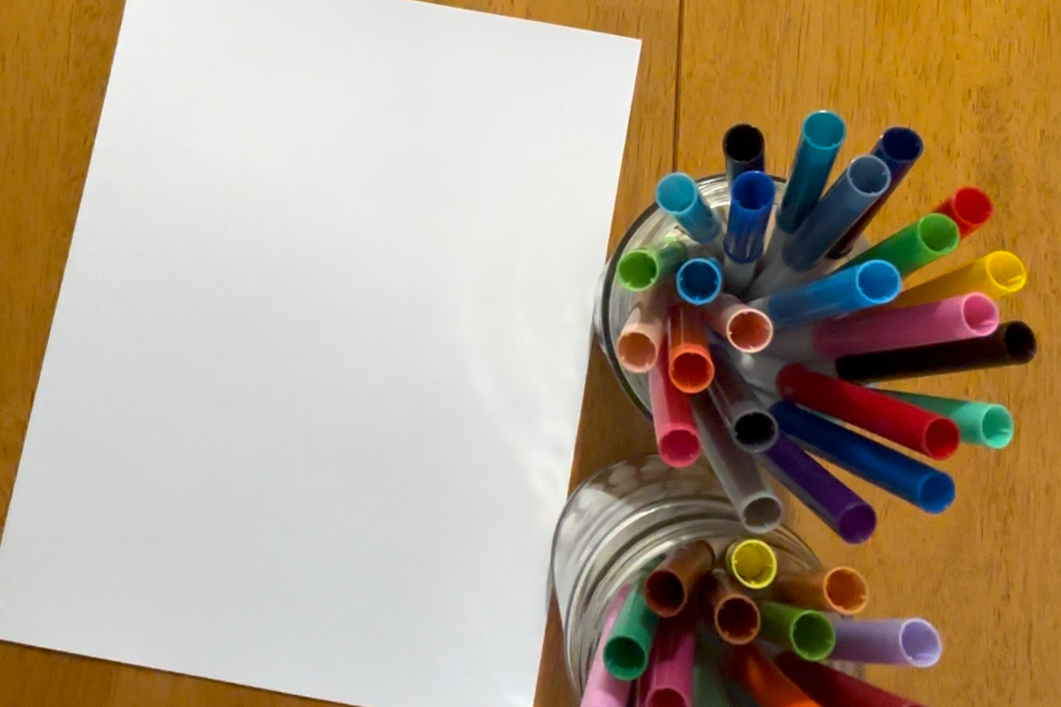
What You’ll Need
One sheet of paper
A pen, pencil, or marker
Optional: colored pencils or markers
A timer (Phone, watch or clock)
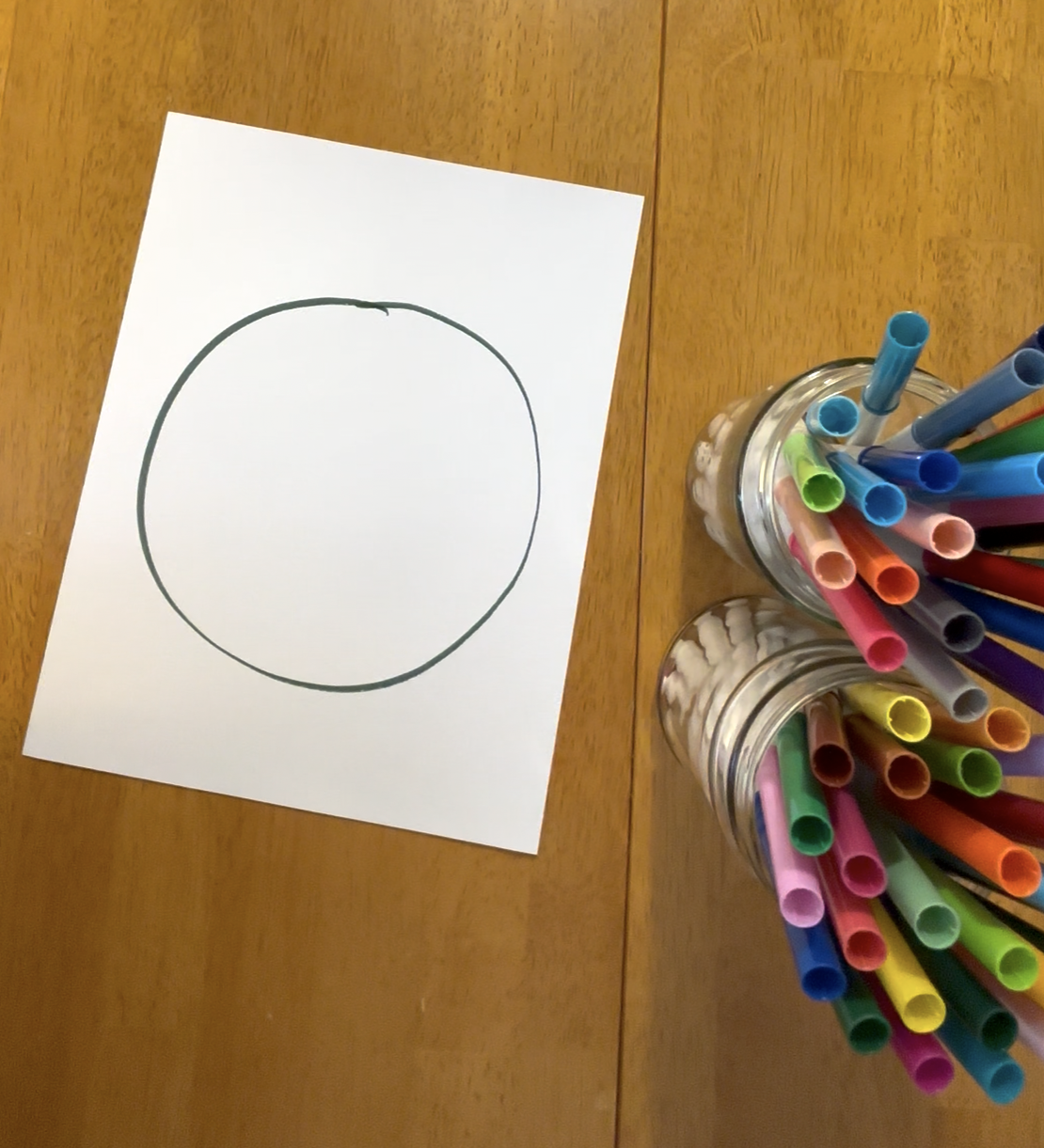
Step 1: Draw the Circle
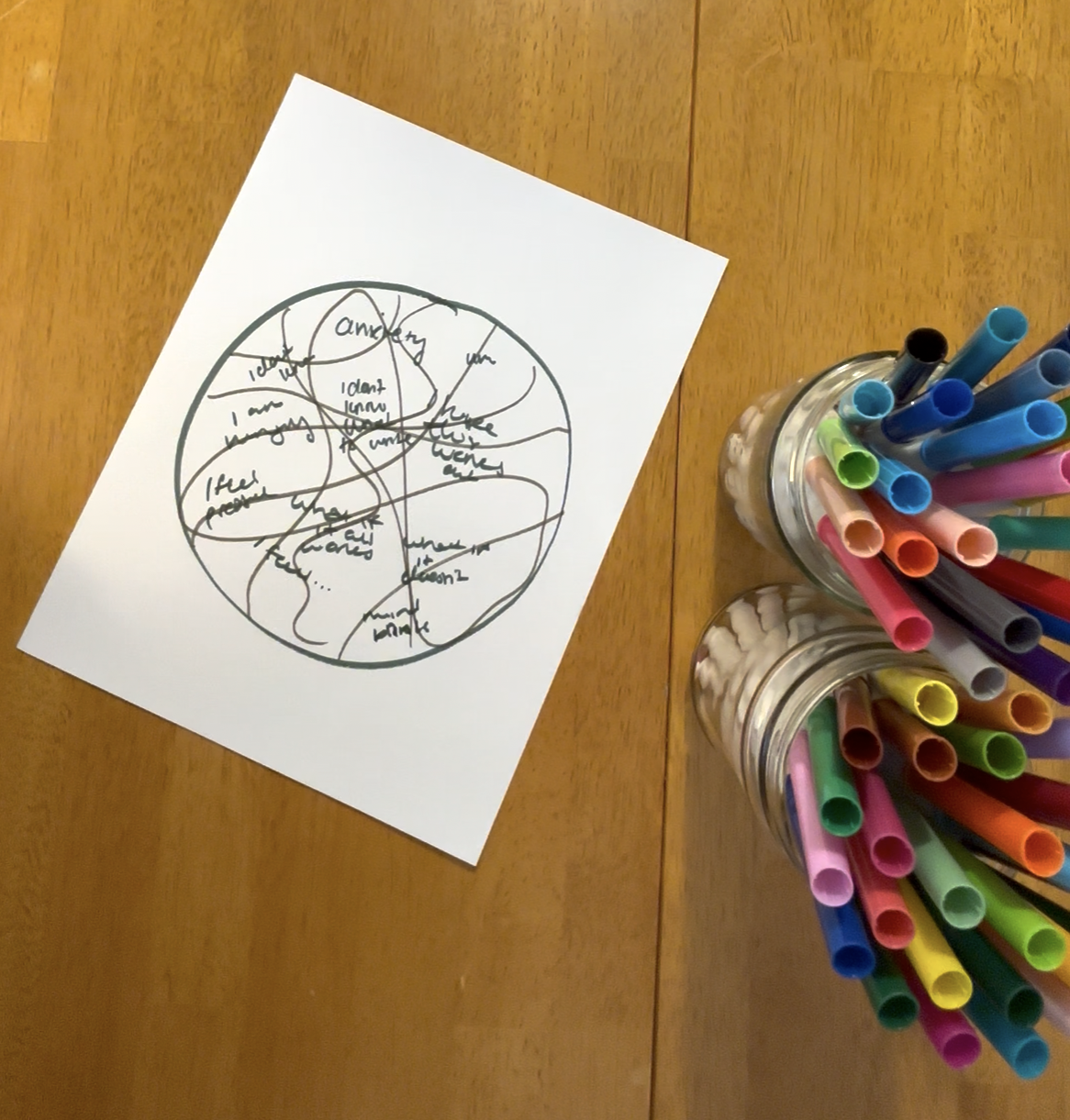
Draw a large circle on your paper. This circle will act as a container for your thoughts during the exercise.
Take one slow breath before continuing.
Step 2: One‑Minute Thought Unload
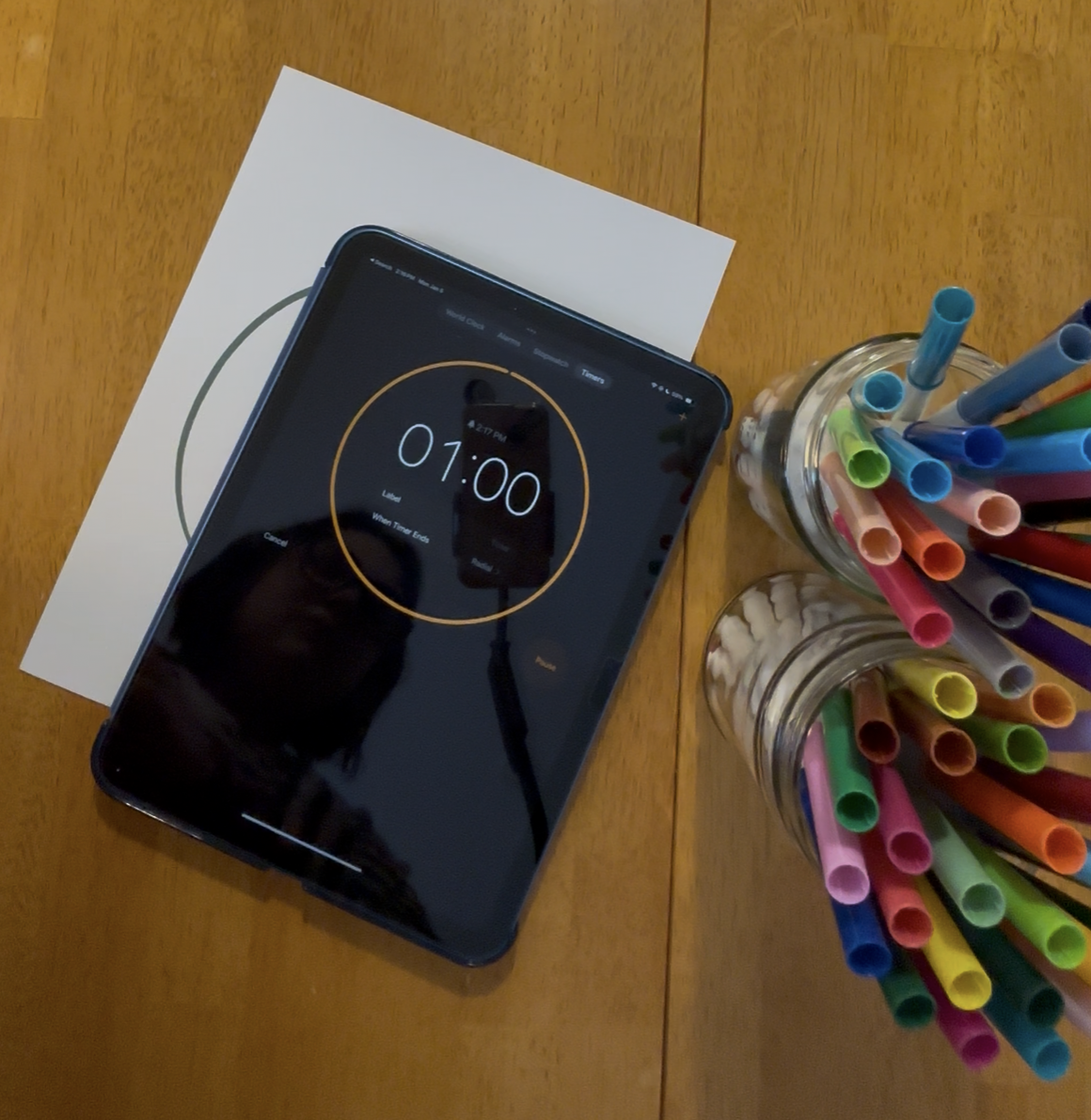
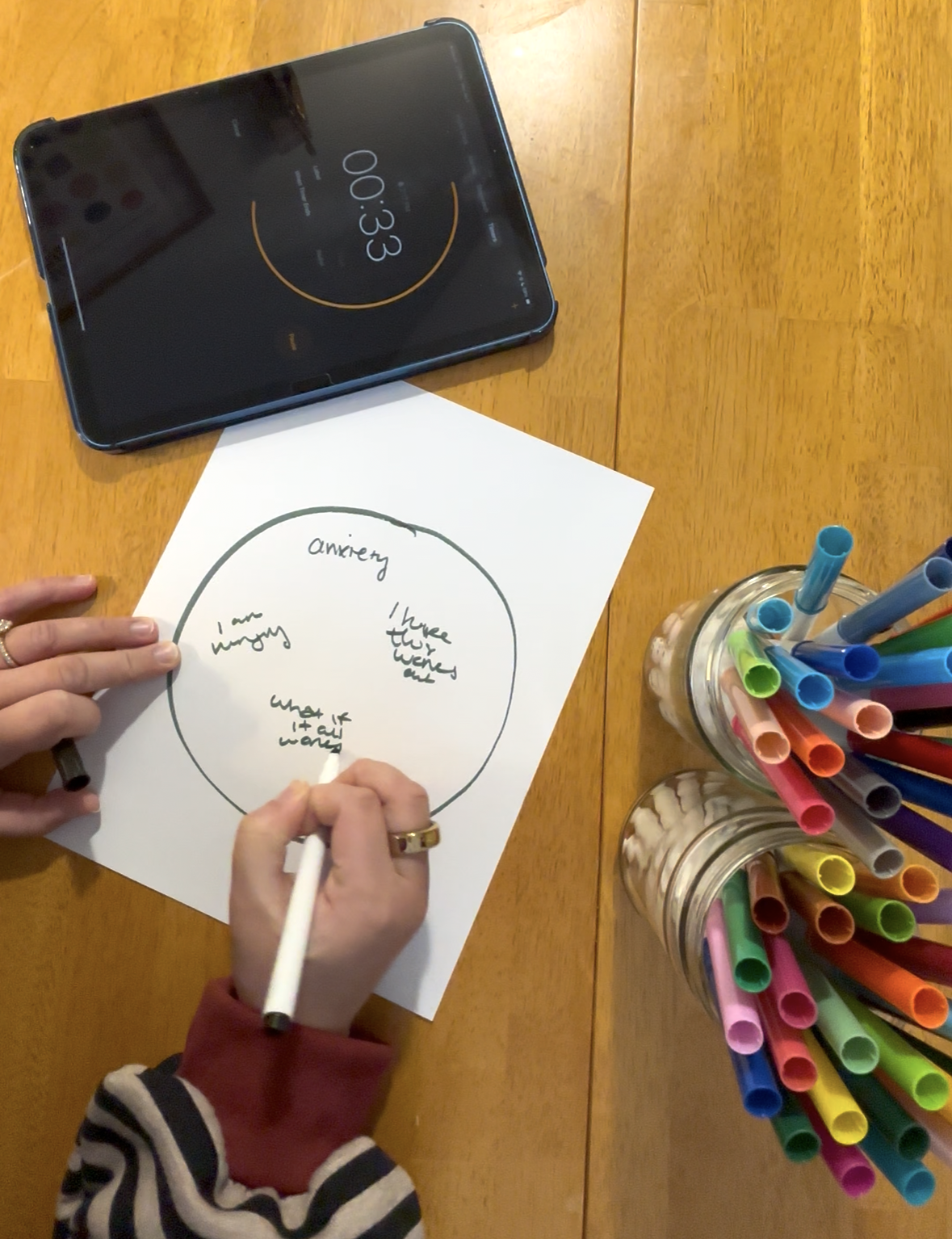
Set a timer for one minute. Inside the circle, write down any thoughts that come up. These can be worries, reminders, phrases, or questions.
There’s no need to organize or filter—just let the thoughts land on the page. When the timer ends, stop writing.
Step 3: Add Squiggles
Using your drawing utensil, draw loose squiggles, loops, or lines over and around the words inside the circle. Let your hand move intuitively.
This step helps disrupt the visual dominance of the thoughts and shifts attention into movement.
Step 4: Create the Mandala
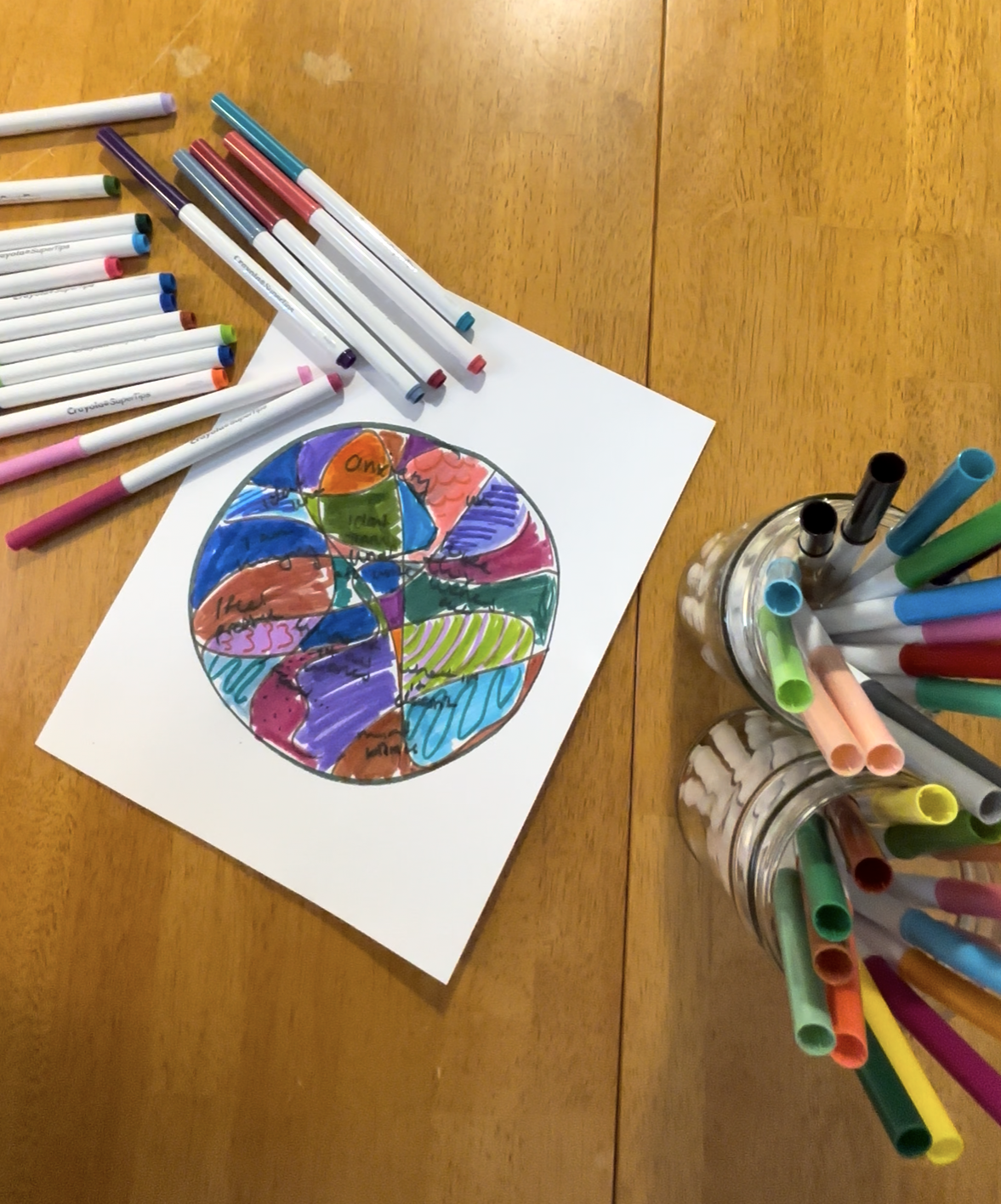
Begin filling in the shapes created by the squiggles using lines, patterns, or color. Continue until the words are covered or blended into the artwork and the circle feels complete.
There’s no right way to do this—follow what feels grounding or calming.
Step 5: Pause and Notice
When finished, take a moment to notice your breath, your body, and the space around you. You may place a hand on the page or take one slow breath to help settle.
When This Practice Can Be Helpful
This exercise can be especially supportive when:
Your thoughts feel repetitive or overwhelming
Anxiety is making it hard to focus
You want a grounding tool that doesn’t rely on words alone
Traditional mindfulness practices feel inaccessible
It can be used in therapy, between sessions, or as a self‑guided grounding practice at home.
Download the Free Worksheet
If you’d like a guided, printable version of this exercise, you can download the Visual Containment for Overthinking worksheet.
You’re welcome to return to this practice anytime your mind feels crowded. Even a few minutes of creative grounding can create a meaningful pause.
This exercise is intended as a supportive wellness tool and is not a substitute for therapy or mental health treatment.